Bangkok has no single centre. The old royal district, the shopping core, the business district and the nightlife streets are separated by several kilometres, and a short distance on a map can mean an hour in traffic. For that reason, where you sleep matters more here than in most cities. The best base is usually the one closest to rail or a river pier, not the one closest to a particular temple.
This guide compares the main areas by transport, atmosphere and typical budget so you can pick one. It pairs with the Bangkok hub and the 3-day plan.
How to choose
Start with three questions.
- How long are you staying? For two to four days, pick somewhere on the BTS or MRT. For a week or more, a quieter neighbourhood becomes realistic.
- What will you do most? If you plan temples and river sights, prioritise a river pier or Sathorn. If you plan shopping, food and nightlife, pick Sukhumvit or Siam.
- How do you arrive? If you arrive by Airport Rail Link at Suvarnabhumi, a hotel near Phaya Thai, Ratchathewi, Makkasan or Siam saves a taxi. If you arrive at Don Mueang, check bus and train options in the airport to city guide.
Area comparison
| Area | Vibe | Rail / boat access | Typical mid-range price per night* | Best for |
|---|---|---|---|---|
| Sukhumvit (Nana-Asok-Phrom Phong-Thong Lo) | Busy, international, restaurants and bars | BTS Sukhumvit line; MRT at Sukhumvit/Phetchaburi | THB 1,500-4,000 | First-timers, food, nightlife |
| Siam / Ratchathewi | Malls, city-centre convenience | BTS Siam interchange; Airport Rail Link at Phaya Thai | THB 1,500-3,500 | Shoppers, short stays, airport access |
| Silom / Sathorn | Offices by day, rooftop bars at night | BTS Silom line; MRT Silom; BTS Saphan Taksin to river pier | THB 1,500-4,000 | Riverside access, Lumphini Park |
| Riverside (Charoen Krung, Wongwian Yai) | Quieter, hotel-resort feel | Chao Phraya boats; shuttle boats | THB 2,000-6,000+ | Couples, romantic stays |
| Rattanakosin / Banglamphu (incl. Khao San area) | Historic, backpacker streets | River pier at Phra Arthit or Tha Chang; no direct rail | THB 400-2,000 | Temple walkers, budget travellers |
| Chinatown / Hua Lamphong | Dense, food-focused, authentic | MRT Hua Lamphong and Wat Mangkon | THB 1,200-3,000 | Street-food fans |
| Ari / Phaya Thai / Chatuchak | Cafes, local life, weekend market | BTS Sukhumvit line north; MRT Chatuchak | THB 1,000-2,800 | Longer stays, local feel |
*Approx., as of 2026. Prices vary by season, hotel grade and event dates; check the current price on the hotel's own page or a booking marketplace.
Area by area
Sukhumvit
Sukhumvit Road runs east from the city centre and is the easiest pick for many first-time visitors. The BTS follows it, so you can reach Siam, Chit Lom and the rest of the line without a taxi. Lower Sukhumvit (Nana to Asok) is busy and lively with nightlife and street food; further east (Phrom Phong to Thong Lo) is calmer, with cafes and cooking-class studios. Expect to hear traffic and see crowds; choose a hotel on a side street (soi) off the main road for quiet.
Siam and Ratchathewi
The area around Siam station is the city's retail core and the interchange between both BTS lines. Hotels here suit short stays, because you can get to most places in two or three stops. Ratchathewi and Phaya Thai, one or two stops north, are slightly quieter and have the Airport Rail Link terminus at Phaya Thai, which makes arrival simple. Jim Thompson House is within walking distance of National Stadium station.
Silom and Sathorn
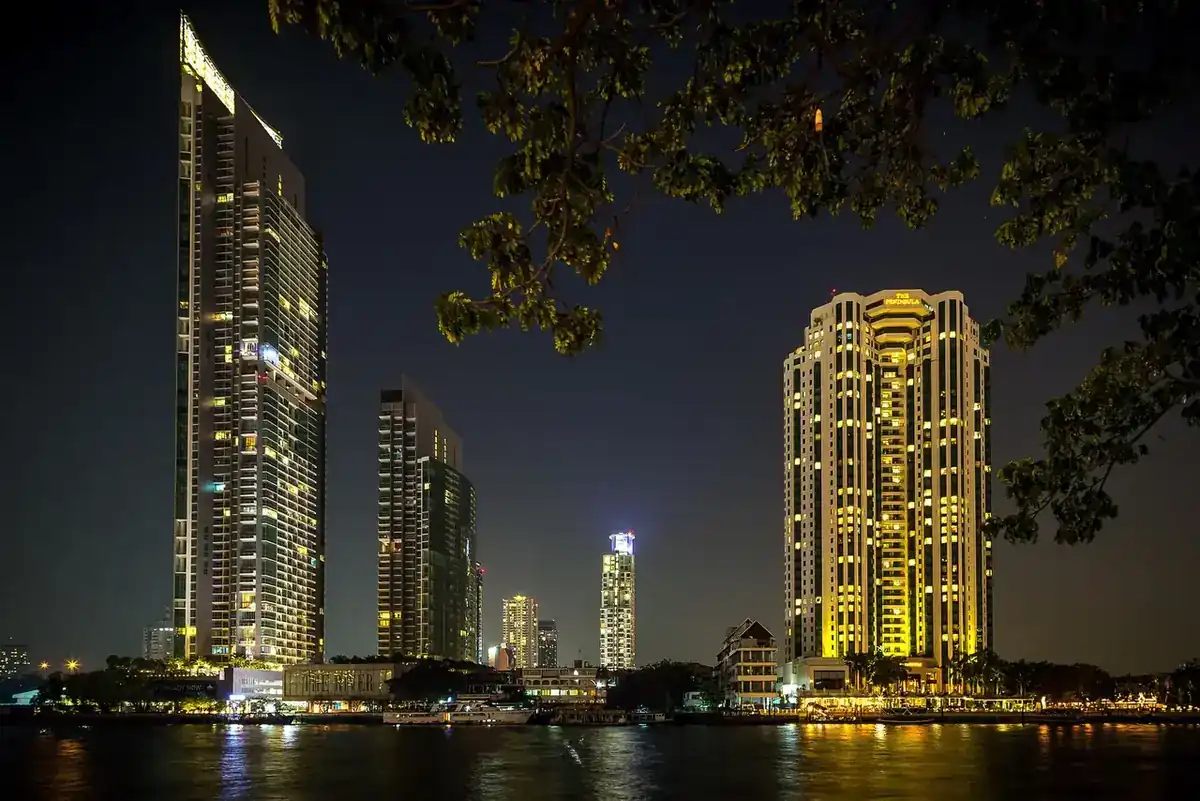
This is the financial district, so it can feel quiet at weekends. It also has Lumphini Park, many restaurants and several well-known rooftop venues. The big advantage is Saphan Taksin station, where BTS meets the Chao Phraya Express boats, giving you a traffic-free route toward the old city.
Riverside
Hotels on the river often run their own shuttle boats to a public pier. This is a quieter and more scenic base but longer to reach everything else, so it suits travellers who want a resort feel in the city. Check the shuttle schedule and where it actually stops before booking.
Rattanakosin, Banglamphu and the Khao San area
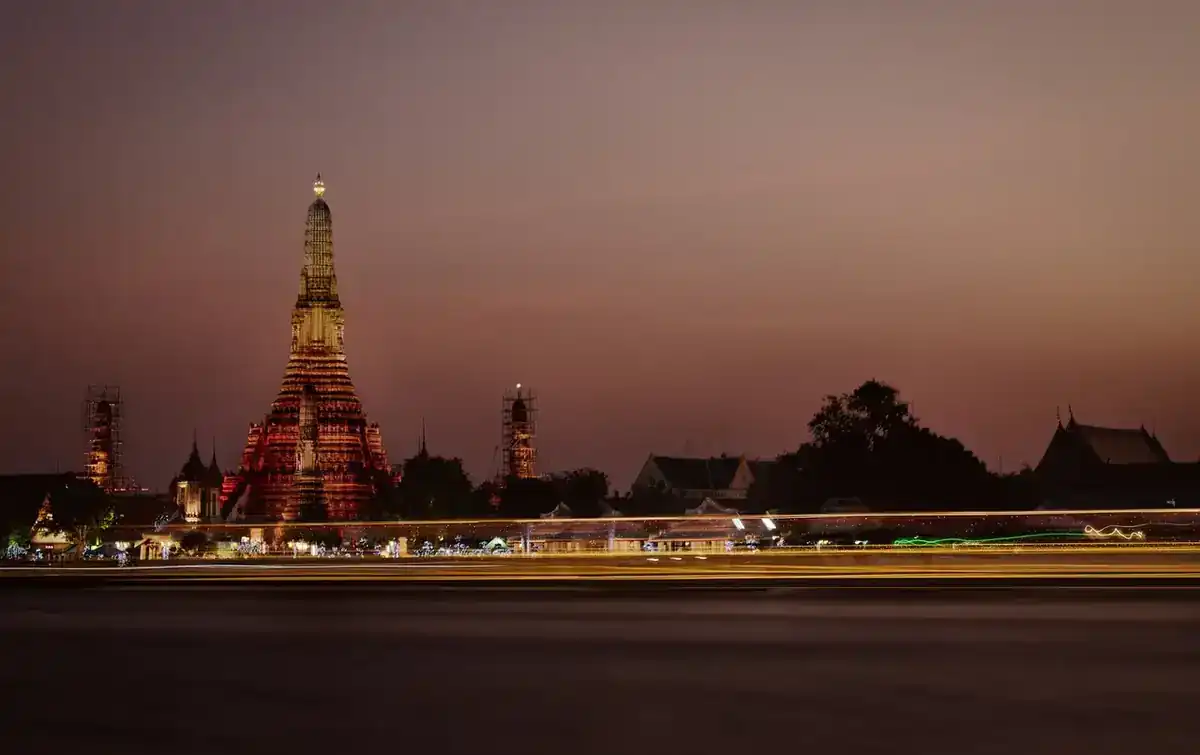
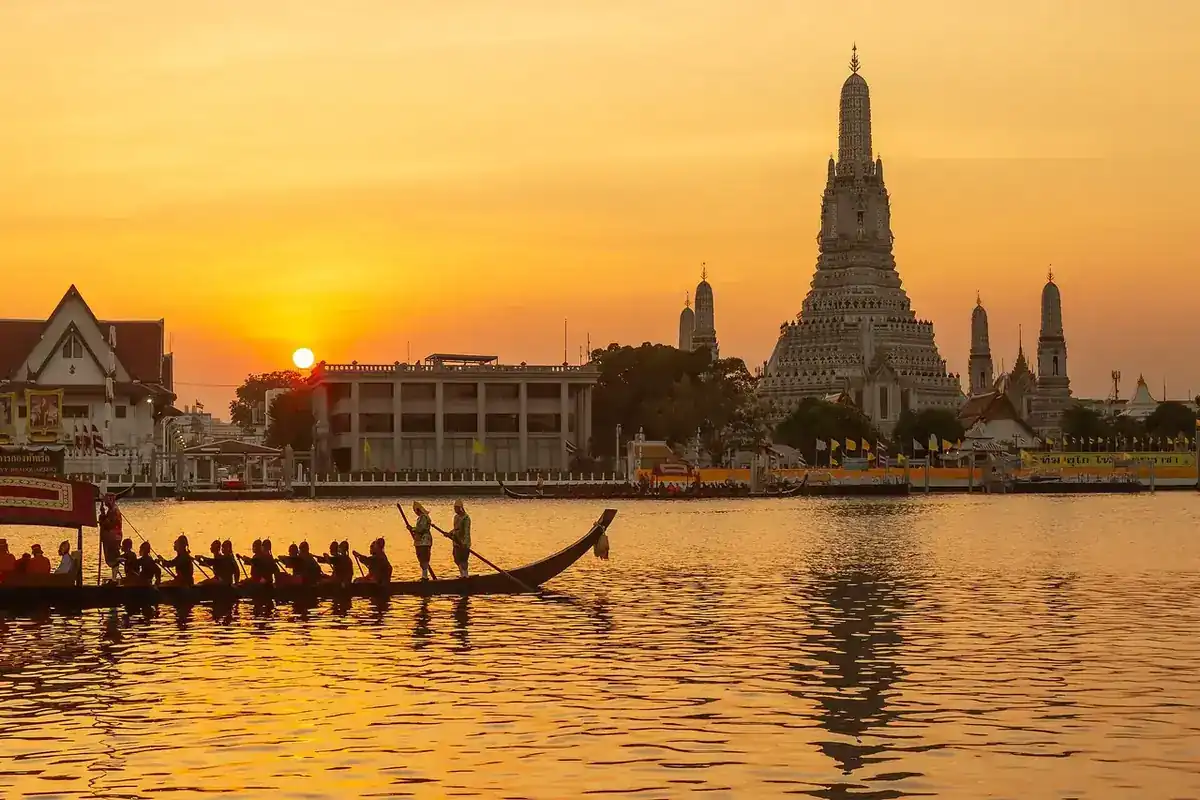
If your priority is walking to the Grand Palace, Wat Pho and Wat Arun, this is the closest base. Khao San Road is a long-established backpacker strip with hostels, bars and street stalls; nearby streets such as Phra Arthit and Soi Rambuttri are calmer. The trade-off: no BTS or MRT station is within walking distance, so you will rely on boats, taxis or tuk-tuks for the rest of the city.
Chinatown
Yaowarat is excellent for evening food and markets. It is crowded, noisy and busy with traffic, but MRT stations at Wat Mangkon and Hua Lamphong make onward travel easy.
Ari and Chatuchak
Ari is a residential area with local cafes and eateries. Chatuchak Park is next to the weekend market. This is a good second-leg base for longer visits but less convenient for temples.
Look at the walking distance from your hotel to the nearest station on a map and subtract the heat. A 15-minute walk in April feels very different from the same walk in December. Aim for under 7-10 minutes to a station, or choose a hotel with a regular shuttle.
Choosing by traveller type
- First visit, 3 days: Sukhumvit (Nana to Phrom Phong) or Siam. Use the 3-day plan to organise days.
- Temple-focused, short stay: Banglamphu or Rattanakosin, or a Sathorn hotel with river access.
- Families: Sukhumvit or Silom for hotels with pools and easy transport; avoid long walks between stations and your hotel.
- Food travellers: Chinatown or Sukhumvit.
- Budget travellers: Khao San area or hostels in Siam, Phaya Thai and Sukhumvit.
- Late arrivals or early flights: Consider a hotel near your airport for the first or last night; check airport transfer options.
Practical tips
- Book flexibly in high season. November to February is busiest and prices rise; the rainy season often has lower rates. See the best time to visit.
- Check for events. Songkran, New Year's Eve and large concerts can raise prices and fill hotels.
- Read the location carefully. Descriptions such as "near the Skytrain" may mean a 15-minute walk or a motorbike-taxi ride. Verify on a map.
- Check what is included. Some hotels add a service charge and tax on top of the listed price; the booking page should say.
- Noise and light. City hotels near bars can be loud; request a higher floor or back-facing room.
- Cash or card. Most hotels take cards, but guesthouses often prefer cash.
Be cautious with unlicensed "tour" offers made by strangers near temples or hotels, and with anyone claiming a palace or temple is closed. Confirm opening status on the attraction's official website or ask your hotel. See Thailand safety, scams and health.
Budget at a glance
| Level | Typical nightly price (approx., as of 2026) | What to expect |
|---|---|---|
| Hostel dorm | THB 250-600 | Shared room, lockers, social areas |
| Guesthouse or budget hotel | THB 500-1,200 | Private room, fan or air-conditioning |
| 3-4 star | THB 1,500-3,500 | Air-conditioning, often a pool |
| Upscale / luxury | THB 4,000+ | Riverside views, full service |
Prices vary widely; always check the current price on the property's own page or a booking marketplace.
Before you book
- Map the hotel against the nearest BTS, MRT or pier.
- Check recent guest comments for noise, cleanliness and airport shuttle accuracy, without relying on a single review.
- Confirm free cancellation terms.
- Check whether breakfast is included and what the hotel's check-in time is, especially for early flights.
- Think about your next leg. If you will leave from Bang Sue (Krung Thep Aphiwat), Mo Chit, Ekkamai or Sai Tai Mai for onward travel, see intercity transport.
For comparing prices, visitors often use large booking marketplaces and then confirm the final rate on the hotel's own site; either approach is reasonable.
FAQ
What is the best area to stay in Bangkok for first-time visitors?
Sukhumvit and Siam are the most common choices because both are on the BTS and have many food, shopping and hotel options. Silom or Sathorn is a good alternative if you want river access.
Is it better to stay near the Grand Palace?
Only if you value walking to the temples above everything else. The area has no BTS or MRT, so reaching other districts takes a taxi, tuk-tuk or boat.
Is Khao San Road a good place to stay?
It suits budget travellers who like a lively street scene. It is noisy at night, so choose a guesthouse a few streets away if you want to sleep early.
How far in advance should I book?
For November to February and for holiday weeks such as New Year, book early. In the rainy season there is usually more availability, but check cancellation terms.
Can I stay near the airport?
Yes, for early or late flights. Check the shuttle options and travel times. For longer stays, stay in the city and use the Airport Rail Link or taxi.
Do I need a hotel with a pool?
Not strictly, but in the hot season many visitors appreciate one for a midday break between sights.
Official sources and further reading
Prices, schedules and entry rules change. Figures here are approximate as of 2026; always confirm on the official or operator page before you book. Spotted something out of date? Tell us.